Home/News/India Injury Crisis and 2027 ODI World Cup Plans
India Injury Crisis: How Five Bengaluru Rehabbers Are Reshaping 2027 ODI World Cup Plans
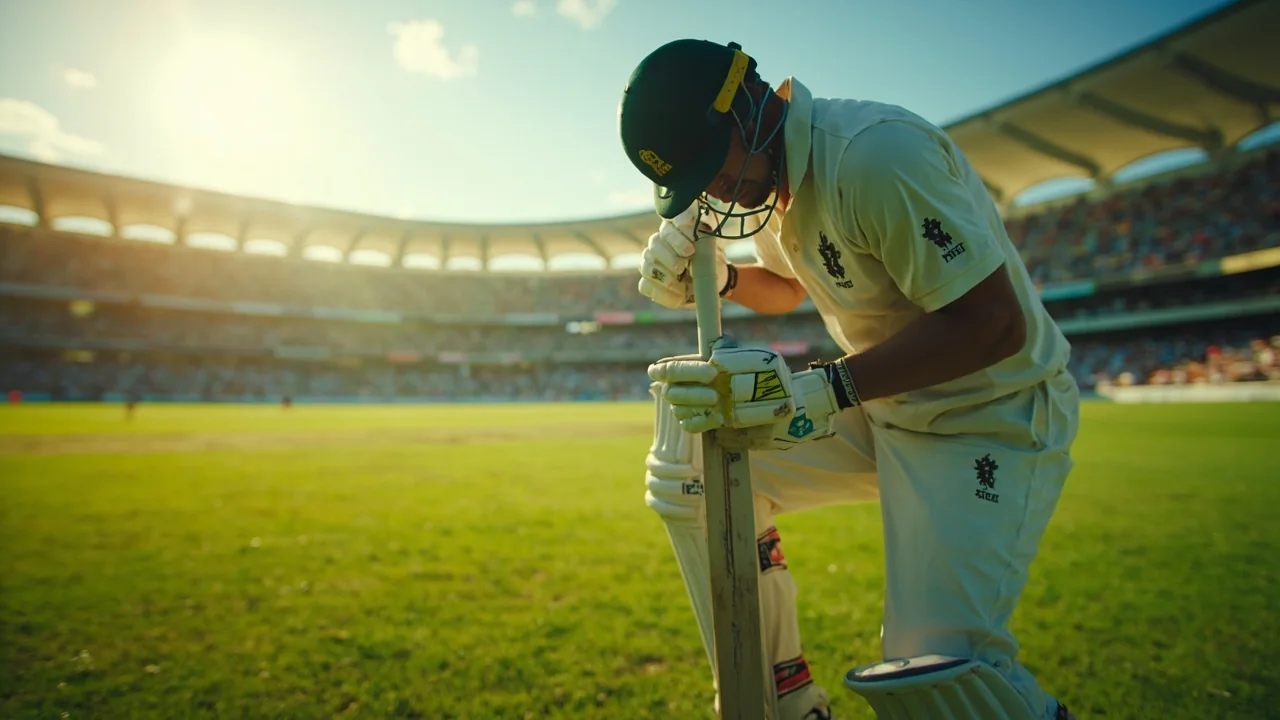
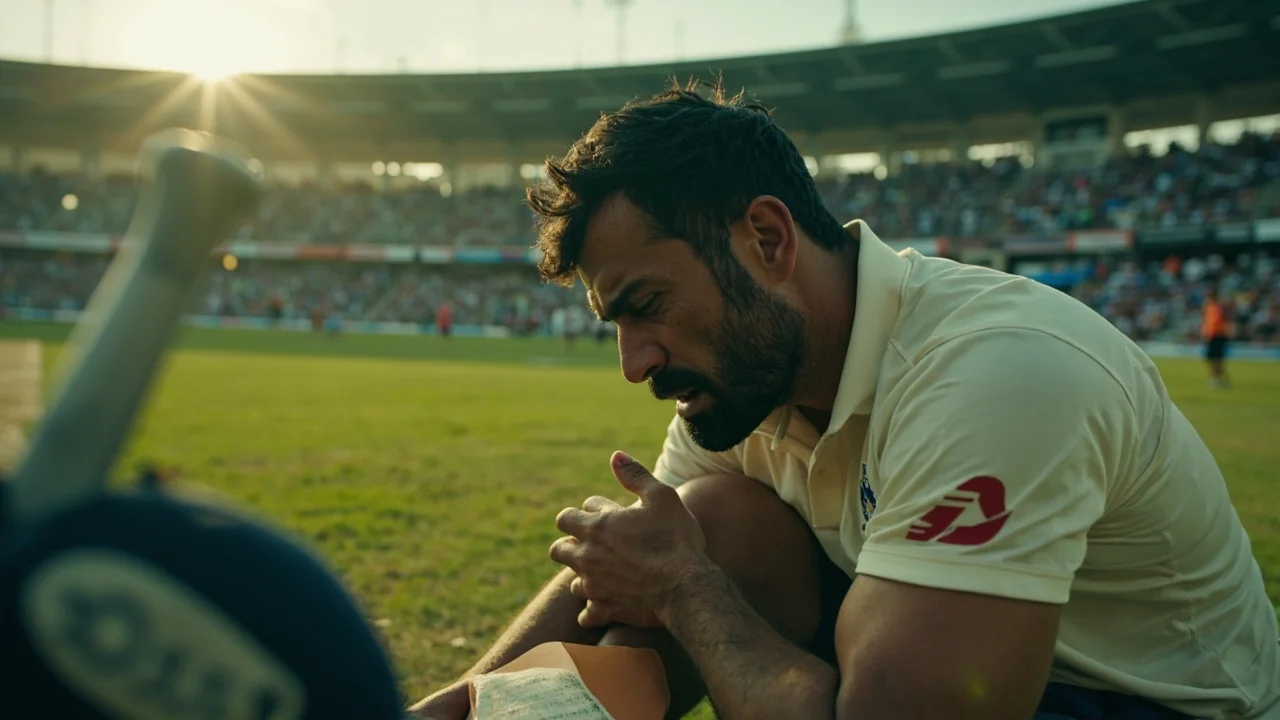
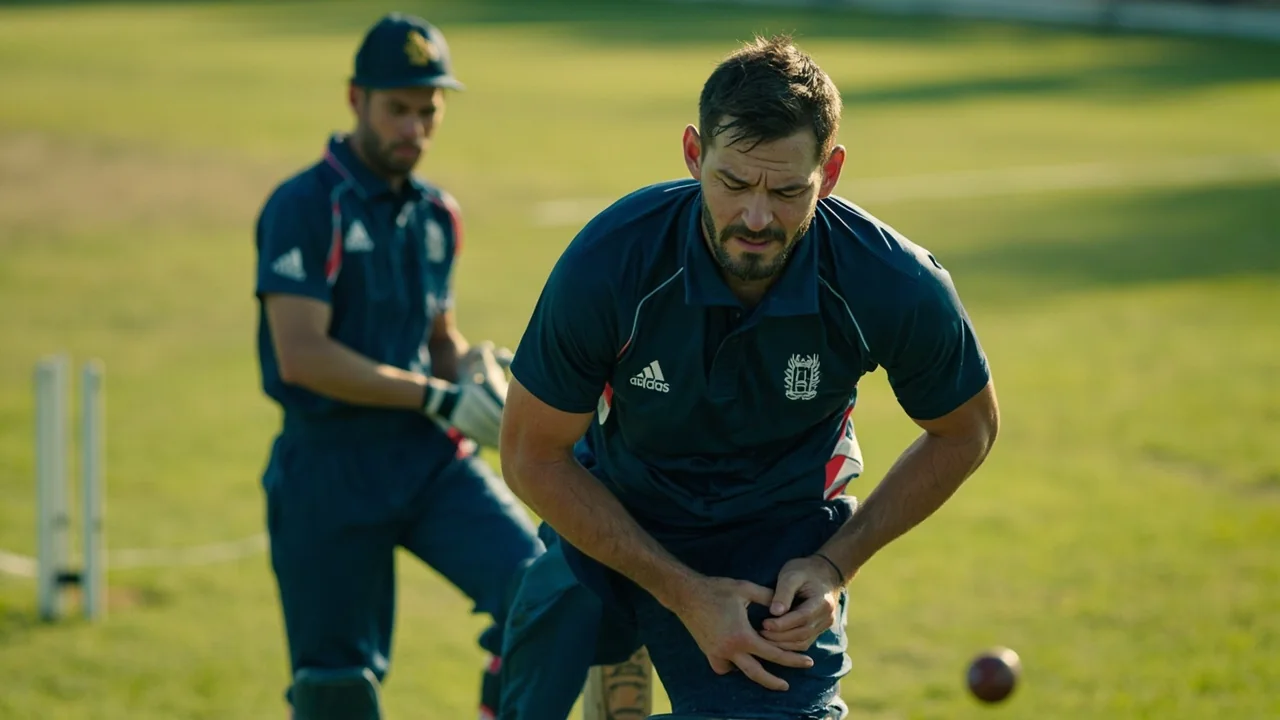
Five frontline India cricketers — Hardik Pandya, Nitish Kumar Reddy, Varun Chakravarthy, Harshit Rana and Washington Sundar — are currently at the BCCI Centre of Excellence in Bengaluru, and Shubman Gill used the Lord's press conference to spell out what that concentration of rehab cases means for next year's 50-over World Cup build-up.
· CricDost News Desk · 8 min read
Compliance Notice: CricDost is a skill-based fantasy sports platform operating in India. This product is available only to users 18+ in permitted states. Fantasy sports involve skill and strategy; outcomes depend on real-world match performance. Please play responsibly. Check local regulations before participating.
The Lord's Press Conference That Put Numbers on the Problem
Shubman Gill has spent most of his first months as India's ODI captain sounding measured. After the Lord's defeat in the third ODI against England, the tone changed. Five members of the originally announced squad did not feature in that match, and Gill named the pattern out loud in the post-match briefing rather than letting the scoreline speak for itself.
"If you look at the first squad we had announced, from that, a minimum of five players did not play this match," Gill said. "If one player is injured, you look at playing another combination. If two players are injured, you look at playing another combination. But if after every match some player is missing, then somewhere we are missing a trick."
The skipper then turned to the calendar. The 2027 ODI World Cup format demands that any side going deep plays 11 matches in a row across the group and knockout stages, with no bilateral series in between to absorb a setback. "Here we have players not being able to finish a two or three-match series," Gill said. "So there is some limitation where our players are not being able to play continuously. They play one or two matches, they suffer a niggle and then we are forced to play a different combination which we originally did not plan to play."
That gap between short bilateral series workload and a three-week tournament grind is the entire argument in one quote. A bowler who can survive two ODIs at 90 percent but cannot survive five at full tilt is a luxury for a tour and a liability for a World Cup. India currently have five such luxuries in rehab.
The Five Faces in the Bengaluru Rehab Group
The seam-bowling depth chart has thinned faster than the spin depth chart, and that asymmetry is at the heart of the World Cup concern.
As of July 20, four members of India's white-ball core were already at the BCCI Centre of Excellence in Bengaluru, with a fifth on his way. Four of the five were part of the Champions Trophy-winning squad in March 2025. Four of the five were part of the 2026 T20 World Cup-winning group. That overlap is what makes the count sting: these are not peripheral players being managed through minor soreness, they are the players the selectors trust to win ICC events.
Hardik Pandya has not played an ODI for India since the Champions Trophy final against New Zealand in March 2025. He remains India's first-choice seam-bowling all-rounder when fit, and his absence collapses the role into a single-player problem. Without Pandya, India do not have a second seam-bowling all-rounder of comparable ceiling. The role has to be filled by bits-and-pieces options or by an extra batter, which compresses the bowling attack and forces a fifth-bowler gamble that has already been visible in the England series.
Nitish Kumar Reddy injured himself during the ODI series against Afghanistan in mid-2026 and is at the CoE alongside Pandya. Reddy was being groomed as Pandya's direct understudy for the seam-bowling all-rounder slot, so his absence does not just remove one option from the depth chart, it removes the player who was meant to absorb Pandya's workload.
Harshit Rana, who was being lined up for the No. 8 role that Pandya typically occupies, has had two injury setbacks in the last six months, including one picked up during the 2026 T20 World Cup warm-up. Two setbacks in half a year is the kind of pattern that turns a frontline pick into a rotation question, and Gill's reference to niggles arriving "as late as the morning of the match" tracks with the kind of low-grade soft-tissue issues that have plagued Rana.
Washington Sundar has had two breakdowns in six months on the spin-bowling side: a side strain before the T20 World Cup, then a hamstring injury this month. Sundar is the seam-bowling all-rounder's spin twin in the side's role map, a player who can bowl ten tight overs in the middle phase and add lower-order runs. Like Pandya, his absence is not just one less bowler; it is one less role option.
Varun Chakravarthy was India's X-factor against the run in the Champions Trophy win. He then suffered a hairline fracture, and a Grade 2 hamstring injury has now ruled him out of action. Chakravarthy was meant to be the surprise weapon for the World Cup, the kind of wrist-spin option that disrupts a side's pre-tournament planning. Until he returns, India do not have that surprise in the locker.
Why the Bumrah Absence Is the One Gill Could Not Hide
Jasprit Bumrah played only two of the three ODIs against England and was ruled out before the Lord's decider. Without him, India went in with Gurnoor Brar and Prince Yadav, two bowlers with limited international exposure, sharing the new-ball and death-overs workload. The captain did not try to disguise the imbalance.
"So keeping all this in mind, it becomes a little difficult," Gill said. "You come to the ground in the morning and come to know a player has a niggle. Then it's almost like, do you want to take a chance? Some player is 80 percent fit, you are playing with five bowlers and if this player comes off after bowling five overs, then who will bowl? This is difficult. So, as a group, we need to improve our fitness and all those things."
The 80-percent-fit problem is the worst kind of selection call. Play the player and risk a mid-innings breakdown that burns the bowling plan. Leave the player out and lose ceiling points from the XI that did take the field. Either way the captain pays for the absence. Bumrah himself is not in the rehab quintet, his issue is short-term, but the effect of his absence in a series that was meant to be a World Cup dress rehearsal is what the public sees. The five in Bengaluru are the structural problem underneath.
What the Calendar Looks Like Between Now and the World Cup
Field-setting conversations between captain and bowler have happened around the world cup plan, but the bowler group has rarely been at full strength.
The 2027 ODI World Cup build-up still has bilateral ODI series to come, plus the Asia Cup window in late 2026 and a multi-format home summer that traditionally gives India their longest uninterrupted run of fifty-over cricket. None of those windows are useful if the same five players are in rehab rather than on the field. India's selectors have been deliberately cautious about rushing players back, the alternative, a torn hamstring or stress fracture during a tournament game, would cost more than a missed bilateral series.
Rohit Sharma and Virat Kohli, both of whom recovered from hamstring injuries earlier in the cycle, are no longer the load-bearing pillars of the ODI side they were before Gill took the captaincy. That shifts the workload onto a younger core, which is exactly the group that is now in rehab. The depth chart that India would want to carry into the World Cup is the depth chart that is currently in Bengaluru.
Gill's framing of the problem was structural rather than personal, but the structural answer sits inside a single training block at the CoE. Get the five back, manage their comeback series, and the World Cup squad shapes itself around a fuller player pool. Keep losing one per series, and the squad starts to be defined by who is available rather than who is best.
The Selection Questions That Follow the Press Conference
Three selection questions now sit in front of the Ajit Agarkar-led selection committee. First, the Pandya question. India need a seam-bowling all-rounder for the World Cup, and the two players groomed for that role (Reddy and Rana) are both in rehab. Either the selectors keep waiting for one of them to return, or they hand the role to a player outside the existing depth chart and accept the ceiling drop.
Second, the spin question. Sundar and Chakravarthy are the two wrist-spin-plus-off-spin middle-overs pairing that won the Champions Trophy. With both in rehab, Kuldeep Yadav is the only frontline wrist-spinner in the active ODI squad, which limits how India can attack in the middle phase. A second specialist becomes non-negotiable, and that is a problem the selectors can solve only by widening the player pool.
Third, the workload question. Gill's own comments about players not finishing three-match series suggest that the selectors and the support staff are looking at workload management as much as selection. A bowler who has played 30 ODIs across a year cannot expect to be fit for an 11-match World Cup without a managed build-up. That means some of the players currently outside the rehab group will be rested through the bilateral series that lead into the tournament, even if they are fit.
What to Watch Between Now and the World Cup Window
Three markers will tell Indian fans whether the injury crisis is being managed or whether it is compounding. The first is the return date of Pandya. If he is back in any ODI before the end of 2026, the seam-bowling depth chart starts to look workable again. If he is not, the all-rounder slot becomes the single biggest selection headache of the World Cup cycle.
The second marker is Sundar's hamstring rehab. Sundar is the role that India have struggled most to replace on the field, and his comeback window will determine whether the Champions Trophy-era bowling shape can be repeated in 2027. The third marker is the rotation pattern around Bumrah. He is the one bowler India cannot afford to lose at the World Cup, and how the selectors manage his bilateral workload between now and the tournament will tell you how confident they are about his durability.
The next major ODI assignment after the England series sits inside a calendar that India will use to test combinations. The bowlers who get the new ball in those matches are auditioning not just for a place in the XI, but for the role that the five Bengaluru rehabbers will vacate when they return. That audition is the most consequential run of bilateral cricket India have played in the World Cup build-up, and it begins before the rehab group has finished its work.
Frequently Asked Questions on the India Injury Crisis
Which India players are currently in rehab at the BCCI Centre of Excellence?
As of July 20, four frontline India players are at the BCCI Centre of Excellence in Bengaluru: Hardik Pandya, Nitish Kumar Reddy, Varun Chakravarthy and Harshit Rana. Washington Sundar is expected to join them to begin his rehabilitation.
How many ODI matches has Hardik Pandya played since the Champions Trophy final?
None. Pandya has not played an ODI for India since the Champions Trophy final against New Zealand in March 2025.
What did Shubman Gill say about the injury situation after the Lord's defeat?
Gill said that at least five players from the originally announced squad did not play the Lord's ODI, and that the pattern of losing a player after every match is forcing combinations that were not part of the original plan. He pointed to the World Cup demand of playing 11 matches in a row as a workload that current players were not consistently clearing.
Which bowlers replaced Jasprit Bumrah in the Lord's ODI?
With Bumrah ruled out of the Lord's decider, India went in with Gurnoor Brar and Prince Yadav sharing the seam-bowling workload, two bowlers with limited international experience at that stage of their careers.
Did the Champions Trophy-winning players also feature in the 2026 T20 World Cup squad?
Four of the five rehabbing players were part of the Champions Trophy-winning squad. Four of the five were also part of the 2026 T20 World Cup-winning squad, with Harshit Rana being the player who missed the tournament after injuring himself during the warm-up.
Are Rohit Sharma and Virat Kohli part of the current injury crisis?
Both senior players recovered from hamstring injuries earlier in the cycle and are not part of the current rehab group. Their absence from the central injury conversation reflects the broader generational shift in the ODI side rather than any fresh fitness concern.