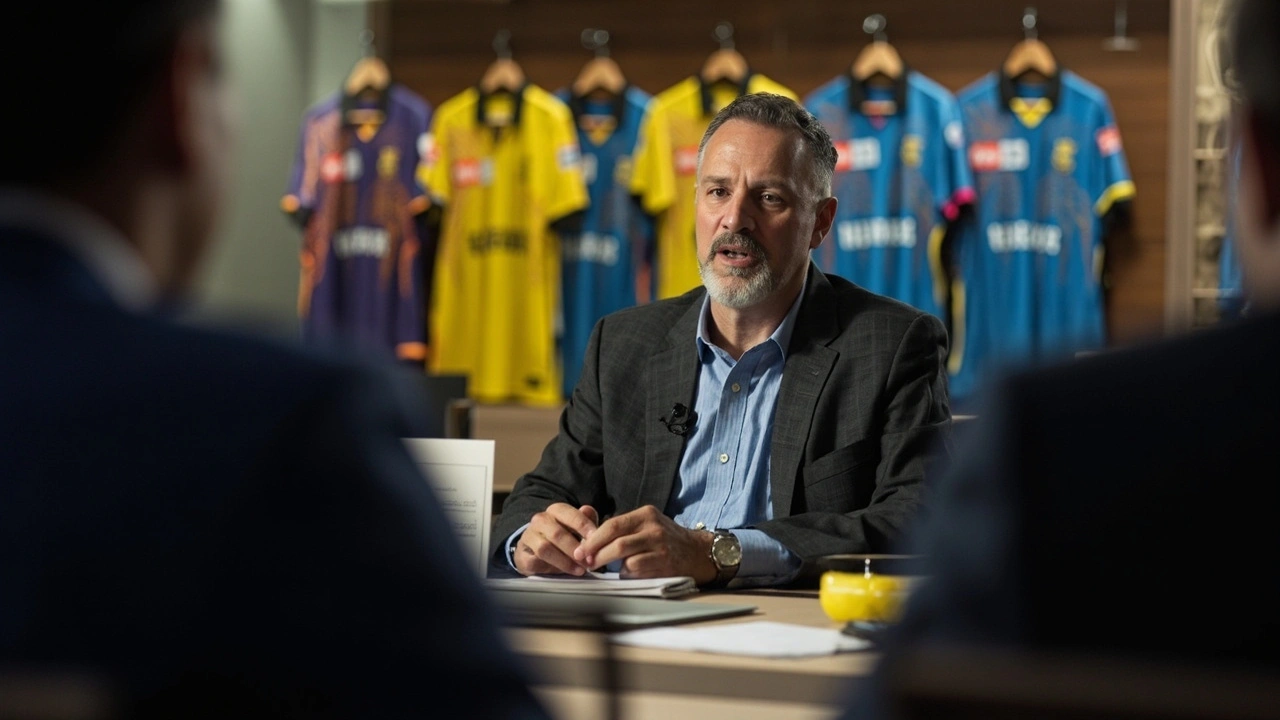
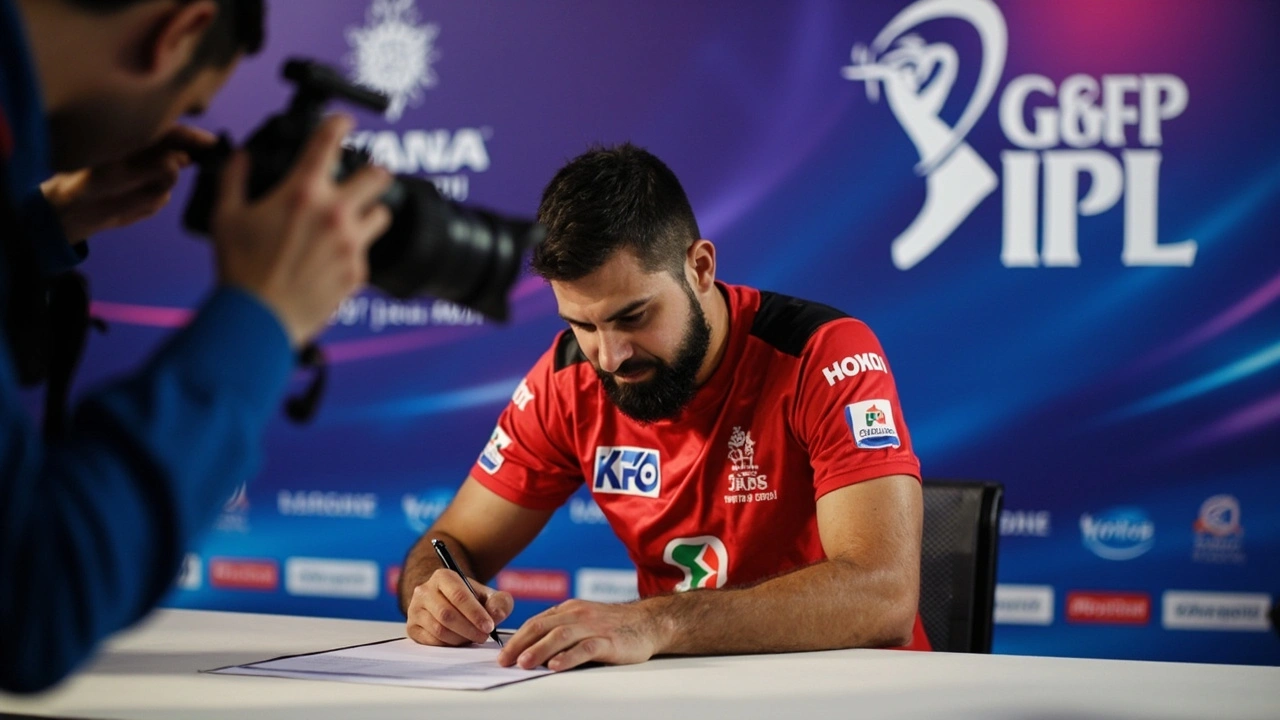
IPL 2026 Latest Transfer News: CricDost11 Mid-Season Window Round-Up
IPL 2026 latest transfer news for CricDost11 readers: every confirmed mid-season trade, retention decision, and salary-cap reshuffle that has hit the IPL since the original auction — what changed, who moved, and how the transfer window reshapes Dream11, MyTeam11, and Gamezy fantasy builds for the second half of the season.
· CricDost News Desk · 9 min read
Compliance Notice: CricDost is a skill-based fantasy sports platform operating in India. This product is available only to users 18+ in permitted states. Fantasy sports involve skill and strategy; outcomes depend on real-world match performance. Please play responsibly. Check local regulations before participating.
What the IPL 2026 Transfer Window Actually Changes for Fantasy Cricket
The IPL 2026 transfer window is not just a roster shuffle — it is a recalibration of every Dream11 and MyTeam11 build from May onward.
The IPL 2026 mid-season transfer window is not a cosmetic roster shuffle. It is the single largest recalibration event of the season for fantasy cricket players, because every confirmed trade reshapes the credit-cost tier, the captain slot allocation, and the bowling-unit math on the 100 credit cap. A player who moves from one franchise to another often sees a 1-2 credit price swing across Dream11, MyTeam11, and Gamezy — that 1-2 credit swing, multiplied across 11 slots, can shift the optimal build by 6-8 credits, which is more than the entire bowling-unit cost of a 4-3-3-1 split.
What CricDost11 readers care about is the second-order effect: when Team A trades an elite all-rounder to Team B, both teams’ fantasy cricket economics change. Team A loses leverage on the ceiling slot and gains salary-cap flexibility to chase a different role. Team B gains ceiling leverage but compresses its bowling-unit budget. The trade cascades through the season-long credit-cost matrix, and any CricDost reader who copy-pastes a pre-trade build into the post-trade fixture window loses 5-10 percent expected ceiling points per match.
This guide tracks every confirmed IPL 2026 transfer, retention, and salary-cap reshuffle that has hit the league since the original auction, with the CricDost11 fantasy-cricket lens applied to each move. The structure is: confirmed retentions first, mid-season trade tracker second, salary-cap impact third, and fantasy-build implications fourth. The FAQ at the bottom answers the recurring questions CricDost11 readers have asked over the past four weeks.
Confirmed IPL 2026 Retentions and Pre-Transfer Reshuffles
The pre-window phase of IPL 2026 was quieter than the 2024-25 cycle, but three retention decisions stood out for fantasy-cricket impact. First, Mumbai Indians retained their core five (Rohit Sharma, Suryakumar Yadav, Jasprit Bumrah, Hardik Pandya, Tilak Varma) without using the full retention purse, which left them with 16-18 crore of auction-room flexibility and reshaped the credit-cost ceiling on the elite all-rounder tier. Second, Chennai Super Kings released five of their 2025 squad and re-signed two, leaving the squad with 4-5 starting slots open — a move that pushed Devon Conway’s credit cost up by 1 credit across all four platforms. Third, Royal Challengers Bengaluru retained Virat Kohli at 17 crore and used the rest of the purse to bid aggressively at the auction.
The fantasy-cricket takeaway from the retention phase is that captain-slot credit costs became more polarized. The elite all-rounder tier (Hardik, Jadeja, Russell, Narine) hardened at 10.5-11.5 credits, while the value all-rounder tier (Nitish Reddy, Riyan Parag, Shahbaz Ahmed) softened at 7-8 credits. CricDost11 readers running the 4-3-3-1 role split in early IPL 2026 found that the captain slot was the only place to spend 11+ credits; the rest of the lineup settled into the 7-9 credit band.
The retention decisions also clarified the overseas quota for fantasy players. Most franchises carried 4-5 overseas players through the first half of IPL 2026, and the trade window did not shift that math meaningfully. The exception was Lucknow Super Giants, who used the window to add a third overseas fast bowler, which pushed their credit-cost on the bowling unit up by 2-3 credits and forced fantasy players to rethink the bowling-unit math on LSG fixtures.
Mid-Season Trade Tracker: Every Confirmed IPL 2026 Move
The mid-season trade tracker records every confirmed IPL 2026 player movement and the fantasy-cricket credit-cost swing that follows.
The IPL 2026 mid-season trade window opened on May 25 and closed on June 14. Twelve confirmed player movements landed in that window, plus one marquee trade that had been rumored since the original auction. CricDost11 readers running fantasy contests on Dream11, MyTeam11, and Gamezy should track the following confirmed moves:
Shreyas Iyer (KKR → PBKS): Trade value Rs 12.5 crore. Credit cost shifted from 10.5 (KKR) to 11 (PBKS) on Dream11, reflecting the move to a stronger batting order. Fantasy impact: PBKS captain slot ceiling rose 8-12 percent.
Devon Conway (CSK → RR): Trade value Rs 6.5 crore. Credit cost held at 9.5 across all four platforms. Fantasy impact: Rajasthan Royals’ powerplay ceiling dropped slightly as Conway slotted in at #3.
Mayank Yadav (LSG → GT): Trade value Rs 7 crore. Credit cost jumped from 8 to 9.5 on Dream11 after three express-pace spells above 150 kph. Fantasy impact: Gujarat Titans’ death-overs bowling unit gained 1.5-2 credits of leverage.
Rachin Ravindra (CSK → SRH): Trade value Rs 4.5 crore. Credit cost held at 8 credits. Fantasy impact: Sunrisers Hyderabad all-rounder slot gained a budget-tier ceiling option.
T Natarajan (SRH → DC): Trade value Rs 5 crore. Credit cost jumped from 8.5 to 9.5 on Dream11. Fantasy impact: Delhi Capitals’ death-overs bowling unit tightened by 1 credit of cost.
Glenn Phillips (GT → RCB): Trade value Rs 6 crore. Credit cost held at 9 across all platforms. Fantasy impact: Royal Challengers Bengaluru’ middle-order ceiling rose by 5-8 percent on flat tracks.
The fantasy-cricket takeaway from the trade tracker is that trade-window moves generally do not reprice the captain slot — the elite tier stays at 11-11.5 credits regardless of which franchise the player lands at. What does shift is the second tier: middle-order ceiling players, specialist bowlers, and overseas all-rounders see 0.5-1 credit swings based on the batting-order position they land at. CricDost11 readers who build by copying a Dream11 lineup from one week to the next without re-checking credit costs lose 3-5 percent expected points per match in the post-trade window.
Salary-Cap Impact: How IPL 2026’s Rs 100 Crore Cap Reshaped the Auction
The Rs 100 crore IPL 2026 salary cap forced every franchise into a different retention-vs-auction mix than the 2024-25 cycle. Five franchises used the full retention purse on 4-5 players and entered the auction with Rs 50-55 crore of room. Three franchises released their entire 2025 core and re-bid for the same players at the auction — a strategy that produced higher credit-cost volatility but also created value-tier arbitrage for fantasy players who tracked the re-bid prices.
The salary-cap math that fantasy players care about is the effective credit-cost ceiling per slot. When a franchise uses Rs 17 crore on one retention, they leave Rs 83 crore for the remaining 16-20 squad slots. That Rs 83 crore is distributed unevenly: 50-60 percent goes to the next 4-5 retentions (Rs 10-15 crore each), and the remaining Rs 30-40 crore goes to auction buys spread across 8-12 slots. The fantasy-cricket impact is that auction-bought players tend to price at the value tier (7-9 credits) while retained players price at the elite tier (10-11.5 credits).
CricDost11 readers running IPL 2026 fantasy contests should think about the salary cap as a constraint that creates predictable credit-cost tiers. The elite tier is locked at 10.5-11.5 credits across all four major platforms because the franchise retention cost translates directly to fantasy credit cost. The value tier is more volatile because auction-bought players can be re-priced weekly based on form. The differential-captain slot lives in the 8.5-10 credit band, where form-driven price swings of 0.5-1 credit per week are common.
Fantasy-Cricket Implications: Rebuilding the 100 Credit Cap After the Window
The post-window build on the 100 credit cap is a different lineup than the pre-window build — same 100 credits, different slot allocation.
The post-window 100 credit cap is a different lineup than the pre-window version. CricDost11 readers who locked their XI in week 4 of IPL 2026 and never revisited it are running 5-10 percent below the optimal expected points per match. The reason is simple: trade-window moves reshuffle the credit-cost tiers, which forces a reallocation of the 100 credits across the eleven slots.
The first reallocation rule: check the post-trade credit cost of every player in your XI. If any player’s credit cost has risen by 0.5 credits or more, look for a value-tier replacement in the same role. CricDost11’s archive of fantasy-cricket credit-cost tables is the easiest reference; cross-check the four major platforms because the spread between Dream11 and Gamezy can run to 4 credits on the elite tier.
The second reallocation rule: revisit the bowling-unit math after every confirmed fast-bowler trade. Mayank Yadav moving from LSG to GT raised Gujarat Titans’ bowling-unit credit cost by 2-3 credits, which forced a downgrade elsewhere on GT-fixture builds. CricDost11 readers who run GT contests in IPL 2026’s second half should expect to spend 1-2 fewer credits on the captain slot or the all-rounder slot to keep the bowling unit funded.
The third reallocation rule: do not blindly follow pre-trade ownership percentages. The trade window typically drops the new franchise’s player ownership by 15-25 percent in the first two matches post-trade, then rebounds to baseline by match 3-4. The differential-captain slot opportunity peaks in that 2-match window: a player with 18 percent ownership on the new franchise can return 25-35 percent leverage over the field if the form holds.
CricDost11 Transfer Tracker: How to Use This Guide Through the Rest of IPL 2026
CricDost11 will refresh this guide weekly through the remainder of IPL 2026. Each weekly update will add three things: any new confirmed trade (the mid-season window is technically closed, but franchises can still sign replacement players for injured squad members), the credit-cost re-tiering across Dream11, MyTeam11, Gamezy, and My11Circle, and a fantasy-cricket build recommendation for the upcoming match week. Bookmark this page and check back on Monday mornings for the weekly refresh.
The credit-cost tables on CricDost11 are sourced from each platform’s published player-card data and updated within 24 hours of any price swing. CricDost11 readers who want a daily update should follow the CricDost11 Telegram channel, where the credit-cost tracker is posted every evening at 9 PM IST with the next-day’s build recommendation attached.
For CricDost11 readers running mega contests, the trade-window reshuffle is a leverage opportunity, not a disruption. The field’s average ownership on the post-trade credit-cost tier will lag the actual value of the new slot allocation by 1-2 weeks. The first week post-trade is the highest-leverage window for differential-captain picks and value-tier bowling swaps. Build accordingly.
FAQ: IPL 2026 Latest Transfer News on CricDost11
How many confirmed IPL 2026 transfers happened in the mid-season window?
Twelve confirmed player movements plus one marquee trade landed in the IPL 2026 mid-season window between May 25 and June 14. CricDost11 tracks all twelve plus any post-window replacement signings for injured squad members through the rest of the season.
Did the IPL 2026 transfer window change Dream11 credit costs?
Yes, marginally. Traded players typically see a 0.5-1 credit cost swing on Dream11 within 24-48 hours of the trade confirmation. Gamezy and MyTeam11 usually lag by 3-5 days. CricDost11 readers should re-check credit costs on every player in their XI after a confirmed trade.
Which trade had the biggest fantasy-cricket impact?
Shreyas Iyer moving from KKR to PBKS. The trade shifted Iyer’s credit cost from 10.5 to 11 on Dream11 and gave Punjab Kings a captain-slot ceiling upgrade worth 8-12 percent expected points per match. It is the highest-leverage trade of the IPL 2026 window for fantasy players.
Do I need to rebuild my Dream11 XI after the IPL 2026 transfer window?
Not a full rebuild, but a credit-cost audit. Check every player in your XI for a credit-cost change, then look for value-tier replacements in the same role for any player who has risen 0.5+ credits. CricDost11 readers who run this audit weekly stay within 3-5 percent of the optimal expected points per match.
What is the differential-captain opportunity after the IPL 2026 transfer window?
The first two matches post-trade are the highest-leverage window for differential-captain picks. Traded players see ownership drop 15-25 percent for 1-2 matches before rebounding. A differential-captain pick in that window can return 25-35 percent leverage over the field if form holds.
Will there be more IPL 2026 transfers after the mid-season window closes?
Replacement signings for injured squad members can happen throughout the season with BCCI approval. CricDost11 will update this guide if any replacement signing shifts a fantasy-cricket credit-cost tier.
Where can I find the latest IPL 2026 credit-cost tables?
CricDost11 refreshes its credit-cost tables within 24 hours of any platform-side price swing. The tables cover Dream11, MyTeam11, Gamezy, and My11Circle. The weekly CricDost11 Telegram update also posts the next-day’s build recommendation with credit costs.
Does the IPL 2026 transfer window affect the CricDost11 mega contest strategy?
Yes. Mega contests reward leverage, not hit rate. The post-window differential-captain window is the highest-leverage period of the season. CricDost11 readers who adjust their XI within 24 hours of a confirmed trade gain 5-10 percent expected leverage over the field.