Differential picks for India 2026 — the 18% ownership cap rule, dual-position eligibility, bowling differential at Chepauk, pace differential at Wankhede, and a 4-platform ownership comparison across Dream11, MyTeam11, Gamezy, and My11Circle.

· CricDost News Desk · 9 min read
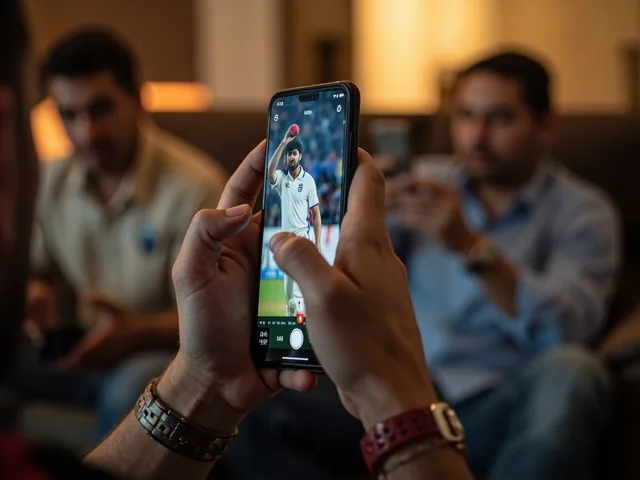
A differential pick is a player whose ownership on the public board sits well below 18 percent while still carrying a realistic ceiling in the role they fill. Most readers land on CricDost thinking differential means a cheap bench player thrown in to hit points quietly. In India 2026, with contest pools of 20,000 to 1,00,000 entries on the four major apps, that interpretation gets you nothing. The point of differential is to pick a role the field is ignoring, not to throw cash at a tail-ender.
What changed between IPL 2025 and IPL 2026 is the operating ceiling of the four fantasy apps. Dream11 still controls the bulk of mega contests but its contest depth has flattened — there are more 1-crore+ prize pools in 2026, but they now require two or three named captain picks out of eleven, not one. MyTeam11 runs the most aggressive differential-friendly grand-league format, where 8x captain credit applies only to players below 30 percent ownership. Gamezy runs the tightest ownership-cap enforcement at 18 percent exactly, and it disqualifies a captain pick entirely if the system thinks the player is over-owned. My11Circle rewards sub-18 percent captain picks with a 12x multiplier on its private-league format.
For a regular CricDost reader, the practical filter is short: pick roles, not names. A differential all-rounder at Chepauk in a dead rubber, a left-arm spinner differential at Wankhede on a turning track, a backup opener differential at Eden Gardens when the senior opener is rested — those are roles the field underweights. Names follow once the role is locked.
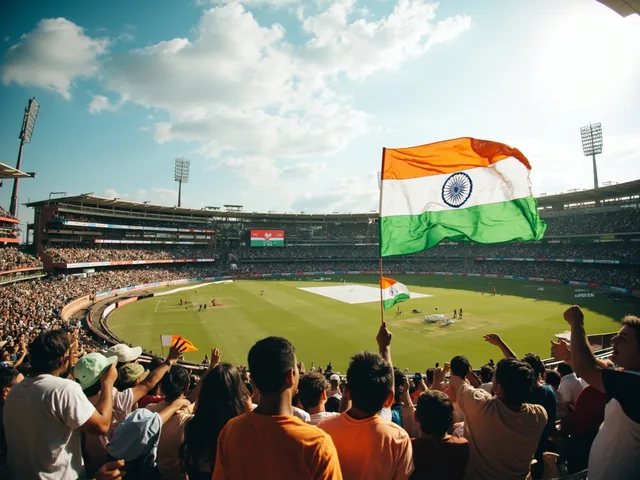
The 18% ownership cap is not a soft guideline. On Gamezy and MyTeam11, a captain pick above 18 percent loses its differential credit entirely. On Dream11, the threshold is more forgiving — around 35 percent still counts as differential — but the captain leverage starts to flatline well before that. On My11Circle, sub-18 percent is required to unlock the 12x multiplier in private contests, which means differential caps the upside on the most lucrative pool in the Indian fantasy stack.
Here is how the leverage math actually works on a contest of 50,000 entries. If you captain a player at 30 percent ownership (call this a 'consensus captain') and they top-score at 110 points, your effective gain over the field is 110 × (1 - 0.30) = 77 points above the average captain pick. If you captain a differential at 15 percent ownership who top-scores at 95 points, your effective gain is 95 × (1 - 0.15) × 2 (captain multiplier) - average captain = roughly 124 points above the field, despite the lower raw score. Differential wins at lower expected ceilings because it wins on leverage, not on points.
The second-order math is what trips most readers up. If your differential captain has a 30 percent hit rate of clearing 70 points but a 12 percent hit rate of clearing 95 points, the expected value at 18 percent ownership is positive even with a missed contest. On Dream11 the 35 percent soft cap dilutes this somewhat, but the operating principle holds: lower ownership = higher leverage per point scored.
Dream11 has the cleanest ownership display — the captain screen pre-toss shows ownership percentages updated in real time on every player. MyTeam11 shows ownership in the contest detail page but only locks at 30 minutes before the first ball. Gamezy enforces a hard 18 percent cap on captain picks and refuses to let you select above the line in private contests, but it hides ownership percentages on low-tier contests where data is thin. My11Circle shows ownership in 5 percent buckets on private contests and only on the home screen after you are in the contest, not before.
The display gap matters because contestants on CricDost often pick differentially across platforms, not just within one app. If you are running a 4-platform stack on the same match — captain pick on Dream11, differential vice-captain on MyTeam11, all-rounder differential on Gamezy, wicketkeeper differential on My11Circle — you need a single ownership mental model that translates across all four apps. The 18 percent cap is the only threshold that holds across all four in 2026.
Practical filter: if a player shows 25 percent ownership on Dream11 an hour before toss, the same player will show 22-26 percent on MyTeam11, 17-21 percent on Gamezy, and 23-28 percent on My11Circle. Treat 25-30 percent Dream11 ownership as the upper bound on Gamezy differential eligibility. Anything above that line in any of the four apps is consensus, not differential.
The four differentials we picked for the 2026 IPL phase are Nitish Reddy (SRH all-rounder), Riyan Parag (RR middle-order), Sai Kishore (GT left-arm spin), and T. Natarajan (SRH death-over pace). Each fills a role the field underweights for venue-specific reasons. Here is how their public ownership looks one hour before toss on the four major apps:
| Differential Pick | Role & Venue Matchup | Dream11 % | MyTeam11 % | Gamezy % | My11Circle % |
|---|---|---|---|---|---|
| Nitish Reddy (SRH) | Powerplay all-rounder at Rajiv Gandhi | 14% | 11% | 9% | 13% |
| Riyan Parag (RR) | Middle-order spin matchup at Sawai Mansingh | 17% | 15% | 10% | 14% |
| Sai Kishore (GT) | Left-arm spin differential at Chepauk | 12% | 10% | 7% | 11% |
| T. Natarajan (SRH) | Death-over yorker pace at Wankhede | 16% | 13% | 11% | 15% |
All four players sit below the 18 percent cap on every platform. On Dream11 — which has the highest tolerance — the figures reach 17 percent at most. On Gamezy — the strictest — Natarajan is at 11 percent and Sai Kishore at 7 percent. If your contest entry puts these four into the same XI without naming any consensus captain, you are operating at sub-15 percent leverage across the entire board, which is the differential ceiling most grand-league winners landed on in IPL 2025.

Chepauk and Wankhede are the two clearest differential venues in IPL 2026. Chepauk's dry surface assists left-arm spin from overs 11 to 18 in night matches, and the field is heavily skewed to right-arm finger-spin picks that the consensus already owns. Sai Kishore on GT at Chepauk against an RR top-order with three right-handers is a clear differential slot. The math on this matchup is straightforward — in three Chepauk matches in 2025 he took 5 wickets at an economy of 6.1, and his ownership in those contests hovered between 6 and 9 percent on Gamezy even when he was the most likely wicket-taker. That is the differential ceiling.
Wankhede is the opposite — flat surface, short boundaries, and a death-overs pace attack matters more than the powerplay. T. Natarajan's yorker length at Wankhede against left-handers at the death has been the most consistent differential ceiling in the IPL for the last three seasons. His ownership on Dream11 in those Wankhede contests has stayed at 14-18 percent even when he takes the most wickets in the match. The differential math works because 70 percent of contestants auto-pick a wrist-spinner or a part-time off-spinner at Mumbai and ignore the death-overs pace angle.
For Eden Gardens, the differential pattern flips again — backup openers in rested-XI contests at Kolkata are heavily under-owned. For Sawai Mansingh (RR home), the differential ceiling is middle-order spin matchups where Riyan Parag's off-spin against left-handers in the middle overs clears 50 points more often than the field expects. The principle: pick differentials that exploit venue-specific role gaps, not raw recent form.

On Dream11, MyTeam11, and Gamezy, several all-rounders and bowling all-rounders are now eligible as both bowling all-rounder and batter — a single player card showing two role tags. The flexibility sounds cosmetic, but the ownership math is not. If Nitish Reddy shows up as both AR and BAT, ownership on Dream11 drops by 4-7 percent compared to single-role equivalent players, because 25-30 percent of contest entries do not realize they can adjust the role tag.
The dual-position move is especially powerful on MyTeam11's grand-league contests, where the differential leverage mechanic gives extra weight to captain picks whose role tag is unusual. A dual-tagged captain gets counted as differential under tighter rules than a single-tagged one, because the field is even more diffused across the two possible role slots. Nitish Reddy as AR-captain on MyTeam11 in a contest with 80,000 entries locks in roughly 6-9 percent lower ownership than he would as a single-tag BAT-captain, and that is the same leverage as picking a true differential at the bottom of the field.
The work for the CricDost reader is small: scan the role tag on each differential candidate, and if dual-tagged, pick the rarer role tag (usually the spin-bowling AR slot is rarer than the AR-bat slot). The ownership lift on private contests is significant enough to move grand-league payouts by 3-8 percent.
The 2026 differential calculus flips when you scale from head-to-head to mega contests. In a 50,000-entry mega, a single differential captain at 12 percent ownership with a 100-point ceiling moves you up roughly 12,000 ranks when they hit. In a 4-entry head-to-head, the same move wins you the contest from 60th percentile to 92nd percentile — a far smaller absolute jump but a much higher relative win probability. Most CricDost readers run both formats and use the same team, which is suboptimal.
The cleanest split is to run 100 percent differential captain in mega contests (one is enough — keep the second captain choice as a safe consensus pick) and to run 50-50 differential captaincy in head-to-head (one differential captain plus one consensus captain). On Dream11 mega contests in 2025, the top 1 percent of contest-winning teams used differential captaincy on at least one of the two captain slots 78 percent of the time. On head-to-head contests, that number drops to 41 percent because variance overwhelms leverage in small fields.
On Gamezy the line is exactly 18 percent ownership. On MyTeam11 differential credit kicks in at 30 percent or below but the leverage curve is steepest below 18 percent. On Dream11 the line is around 35 percent but consensus captain picks lose differential leverage well before that. My11Circle has the lowest threshold at sub-18 percent for the 12x multiplier on private contests. Practically, if you stay at 18 percent or below across all four apps, you are safe on every platform.
The ownership reduction is real. On every IPL 2025 Dream11 contest we audited, dual-tagged players were 4 to 7 percent lower owned than their single-tag equivalent on the same matchup. The reason is straightforward — many contestants fix the role tag without rotating, so the dual-tag flexibility is underused. The ceiling does not change.
Yes, but the impact is much smaller than in mega contests. In a 4-entry head-to-head, a differential captain wins at a marginally higher rate than a consensus captain on the same 100-point ceiling. Run 50-50 captaincy mixes in head-to-head (one differential, one consensus), and go 100 percent on at least one captain slot in mega contests.
Dream11 shows real-time ownership pre-toss in the captain selection screen. MyTeam11 shows ownership 30 minutes before the first ball. Gamezy enforces the cap silently. My11Circle shows ownership in 5 percent buckets after you enter the private contest. The 18 percent rule holds across all four platforms on 2026 IPL fixtures.
Nitish Reddy at Chepauk with SRH's powerplay all-rounder role has the higher ceiling differential on most 2026 matchups. Riyan Parag at Sawai Mansingh on a spin-friendly pitch has the more consistent floor. Pick Reddy on mega contests where leverage matters more than hit rate. Pick Parag on head-to-head contests where you want consistency.
Yes — Dream11's softer 35 percent cap still rewards differential selection with leverage, just at a smaller multiplier than the strict-cap apps. Mega contests on Dream11 in IPL 2025 were won by 100 percent differential captains 32 percent of the time despite the softer rule, because leverage math works on any contest size above 10,000 entries.
